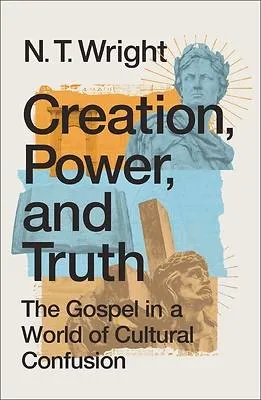
I read Creation, Power, and Truth: The Gospel in a World of Cultural Confusion by N.T. Wright. In this book, Wright shows that many of the cultural issues we encounter today have Ancient philosophical origins. He shows that the Gospel confronted these cultural issues in the past and can guide us in how we interact with cultural issues today.
Google AI and Faith Adjacent help to summarize the book better than I am able to do so.
In “Creation, Power, and Truth: The Gospel in a World of Cultural Confusion,” N.T. Wright explores how the Christian gospel challenges contemporary culture’s dominant narratives. He argues that the gospel confronts prevailing intellectual (neo-gnosticism), moral (neo-imperialism), and political (postmodernity) values by reinterpreting the biblical story through a Trinitarian lens. Wright suggests that understanding the gospel requires reconsidering key aspects of the biblical narrative and its connection to ancient and modern worldviews. The book aims to equip Christians to articulate and live out the gospel in a world grappling with these cultural confusions.
Specifically, Wright examines:
Creation and Neo-Gnosticism:
He challenges a contemporary neo-gnostic worldview, which often devalues the physical world and emphasizes a dualistic separation between spirit and matter. Wright argues that the Christian gospel, with its emphasis on God as Creator, offers a robust creation theology that counters this dualism.
Power and Neo-Imperialism:
Wright critiques the tendency towards neo-imperialism, which he sees as a modern manifestation of the ancient desire for power and control. He argues that the gospel, centered on the crucified and risen Jesus, redefines power through sacrificial love and challenges all forms of imperial pretension.
Truth and Postmodernity:
Wright addresses the challenges posed by postmodernity, with its skepticism toward objective truth and grand narratives. He contends that the Spirit of Truth, as revealed in Jesus, offers a counter-narrative that affirms an embodied truth, accessible through faith and witness.
Ultimately, Wright’s work encourages Christians to engage with the cultural landscape, offering a compelling vision of the gospel’s relevance and transformative power in a world characterized by intellectual, moral, and political confusion, according to Faith Adjacent.
Leave a Reply