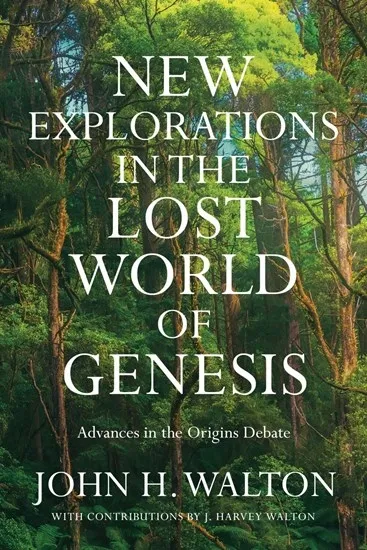
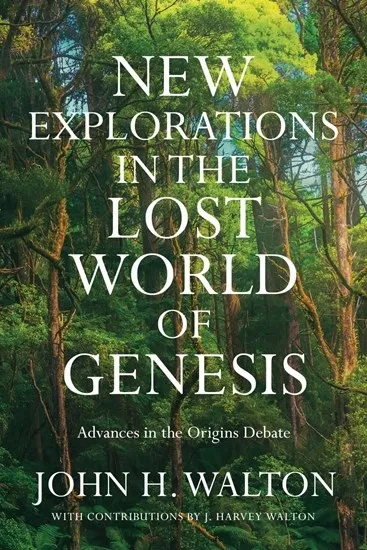
I have read all of the “Lost World” books by Dr. John H. Walton. Each book covers topics from the Old Testament by examining the text through the author’s Ancient Near East culture. This gives a more in-depth understanding of the text.
The most current book is New Explorations in the Lost World of Genesis: Advances in the Origins Debate by John H. Walton
It has been more than 10 years since the first book and over time, John has had discussions and interactions with various scholars that have refined his understanding of Genesis 1-3. In each chapter on a topic, he summarizes his past belief, provides his present belief, summarizes why he has changed his mind and then answers questions of skeptics over the years.
As in the past, I highly recommend the “Lost World” series of books, Even though this is a summary book, I would not start with this book. I would start with The Lost World of Genesis One to get a detailed analysis of how he understands Genesis. Then, you could skip to this new Exploration book.
I appreciate Dr. Walton’s willingness to reflect, research, interact and change his mind on topics if he finds better ideas.
Here are some quotes from this book.
- A refrain that I often repeat is that it is not my intention to present the “right” answer and to expect everyone to adopt my conclusions. Instead, my job is to be a faithful interpreter and to put information on the table that others may not have so that they can make more informed decisions. I have learned that even when I have heard a question dozens of times, I need to listen carefully to the way it is posed to try to understand what concerns the questioner has.
- People sometimes get concerned that if interpretation requires a technical level of information, that it makes the Bible inaccessible to them. I have heard the complaint that the need for linguistic, literary, and especially cultural information effectually takes the Bible out of their hands and makes them dependent on specialists. The fact is, however, that we depend on specialists all the time for information that is important to us. Andrew Brown makes the point convincingly: Now I defend the right of the thinking person to be a self-starter in any area of knowledge and not wait humbly at the gate to be invited in and shown around. We cannot remain at the mercy of the academic elite. But when I suspect something is wrong with my car, I could prop up the hood and, with my limited insight into automotive engineering, begin to unplug anything that looks plugged in, clean anything that looks dirty, and pour some liquid into any convenient-looking opening. It would be better to open a service manual for the car before attempting any remedies beyond checking the oil level. Even better, I could consult my local mechanic, tap into his years of experience, and learn some of the “theory” of car repair and maintenance.
- Some have accused me of relying on hidden, secret information. But the information I use is not secret or mystical; it is actually recoverable from ancient literature that I seek to make accessible. Some have accused me of elitism, promulgating the idea that only the scholars can interpret the text. My response is that we all have gifts to contribute to the church, and scholarship is the one that I have to give. The idea of the church is that we are all dependent on one another for what we each have to contribute. That is what spiritual gifts are all about. I am not hoarding what I know; I am sharing it. I have tried to incorporate all of these experiences into the writing of this book.
- In the end, I hope that as I offer more depth of understanding and more alternatives, Christians will come to understand that faithful interpretation can still result in a variety of opinions on interpretation of specific passages.
“For us, but not to us” succinctly captures John H. Walton’s approach to Scripture.
Leave a Reply