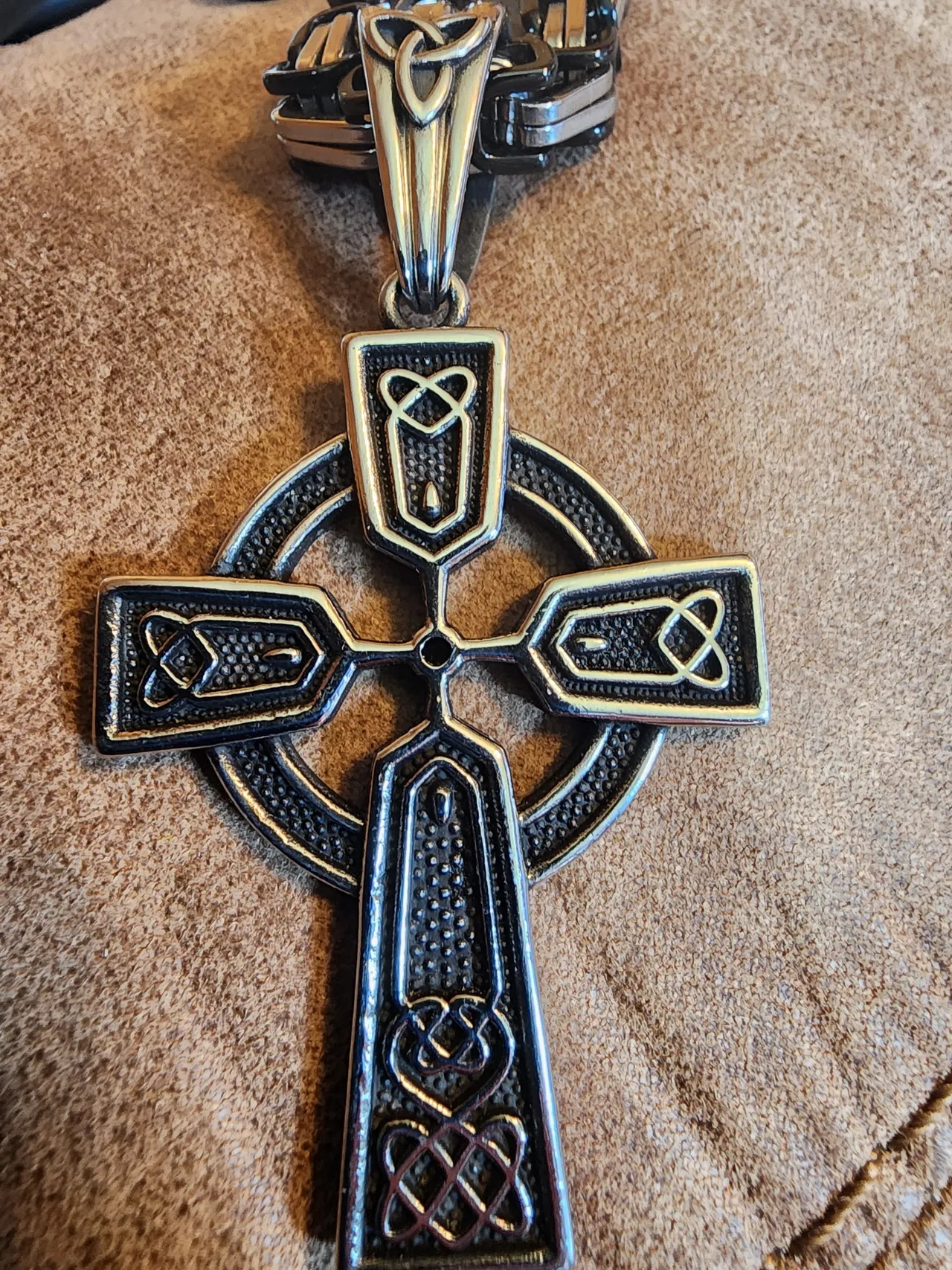
Tomorrow afternoon, Kristin and I leave on a 20 day trip to the UK. Kristin will be posting at kristinemilyfriend.com. I will do short posts on Facebook.
If you have been reading this blog, you will know that I have been striving to deepen my relationship with King Jesus. I have been disillusioned with the superficial, “rock star cultic,” American Evangelical Christianity. I have been researching various ancient expressions of Christianity. I think we can learn more about worshipping the King from our spiritual ancestors.
Kristin has been to the UK twice. I have been with her once. Since we recently became confirmed in the Anglican communion, I started researching how Christianity came to Britain and I was surprised.
In 597, Pope Gregory sent a Benedictine monk, Augustine (This is not the famous Augustine of Hippo from the 4th-5th century.), to Britain to “bring Roman Christianity to a country whose Celtic Christians did not recognize the supremacy of Rome and where paganism still flourished.” (from historytoday.com). Augustine centered his ministry in Canterbury.
Celtic Christianity had been a vibrant monastic faith in Britain a long time before Augustine arrived. When the delegation from Rome met with the Celtic Christians, they determined that Celtic Christianity was “OK” except for two main things. The Celtic Christians celebrated Easter at a different time and the monks’ tonsure (the way they cut their hair) was different. Eventually, the Celtic Christians accepted the Roman way on both of these differences.
Julius Caesar invaded Britain in 54 BCE. Over the next several decades, Roman leaders struggled with how much they controlled these westernmost regions of the Roman empire. It is likely that Jesus and his disciples had some knowledge of the region of Britain. During the time of the Church Fathers, Hadrian was building his wall to protect the Roman Empire from the Picts (Scottish tribes) in 122 AD. Archaeologists suggest Christianity was introduced to Britain by late in the second century. Tertullian and Origen included Britain in the list of areas that Christianity had reached by 200 AD. By the mid-200s, Aaron and Julius, two Romano-British Christians were martyred.
In the 300s AD, Alban becomes the first British Celtic Christian martyr in Britain.
In 314 AD, three Celtic bishops attend a conference in France.
In 400 AD, the British Bishop Ninian becomes one of the first missionaries to carry Christianity across Hadrian’s Wall to the Picts. He founded a church at Whithorn.
In 420 AD, Germanus, Bishop of Auxerre, travels to Britain to support the church and to address the Pelagian heresy.
In 430 AD, Patrick, a native Briton or maybe a native of Brittany, France joins an influx of missionaries to Ireland.
In 563 AD, Columba, an Irish prince, establishes a monastery on Iona, an island off the western coast of Scotland.
In 635 AD, Aidan from Iona, is invited by the Anglo-Saxon King of Northumbria to establish a monastic community on Lindisfarne, a tidal island off the eastern coast of Northern England.
In 664 AD, the Synod of Whitby is convened to settle the dating of Easter and the proper tonsure.
In 665 AD, Cuthbert becomes the Prior and later Bishop of Lindisfarne.
In 793 AD, a deadly raid of Lindisfarne marks the beginning of a 300 year Viking Age.
Our two main goals are to visit two of the three major monastic islands, Iona and Lindisfarne. These islands are known as “thin places.” A “thin place” is a place in time where the space between heaven and earth grows thin and it is easy to encounter the Sacred.
We also plan to visit several sacred and secular places that we have found interesting.
Come along with us as we experience the country, culture, cuisine, creation and chapels of the UK.
Leave a Reply