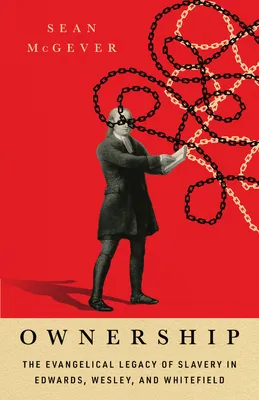
From the Holy Post book club, I was able to read the book, Ownership: The Evangelical Legacy of Slavery in Edwards, Wesley, and Whitefield by Sean McGever.
Jonathan Edwards, John Wesley and George Whitefield were significant leaders in the colonial evangelical revival movement before the American Revolutionary War. This book reviews how each of them viewed slavery.
Jonathan Edwards was from an aristocratic family in Massachusetts. He viewed people as belonging to different classes. His pre-deterministic view of God supported his views on these classifications. He held slaves and believed they should remain in their appointed class of subservience.
George Whitefield was from England, but he spent time in America, leading revivals. He was part of the Holy group that John and Charles Wesley started in college. George started an orphanage in Georgia. Georgia was a non-black colony at first when George started his orphanage. But, the orphanage struggled to maintain its lands because of the lack of laborers. George helped influence a change in the Georgia colony’s charter to allow black slaves so that his orphanage would not struggle for laborers. He seemed to be fine with slavery if it helped his orphans.
John Wesley was born before Jonathan and George and died afterwards. His view of slavery was similar to George. His passion was “saving souls,” and pushed slave owners to teach Christianity to their slaves, but he was not concerned about their status as slaves. During his final years, John Wesley changed his mind about slavery and pushed to stop the slave trade in England.
At the root of American Evangelicalism is the sin of chattel slavery.
Leave a Reply