I grew up adjacent to Brethren congregations and their dispensational teaching deeply integrated into all of the different congregations across various denominations in my hometown.
After leaving my hometown, I attended mainly non-denominational “Bible” churches that were steeped in dispensational teaching. When I chose a seminary to attend, I chose the leading dispensational seminary, Dallas Theological Seminary.
If you have read any of my earlier posts or recognized the name of my blog, you have seen that I am continuing to study and my theological understanding has ventured away from dispensational teaching.
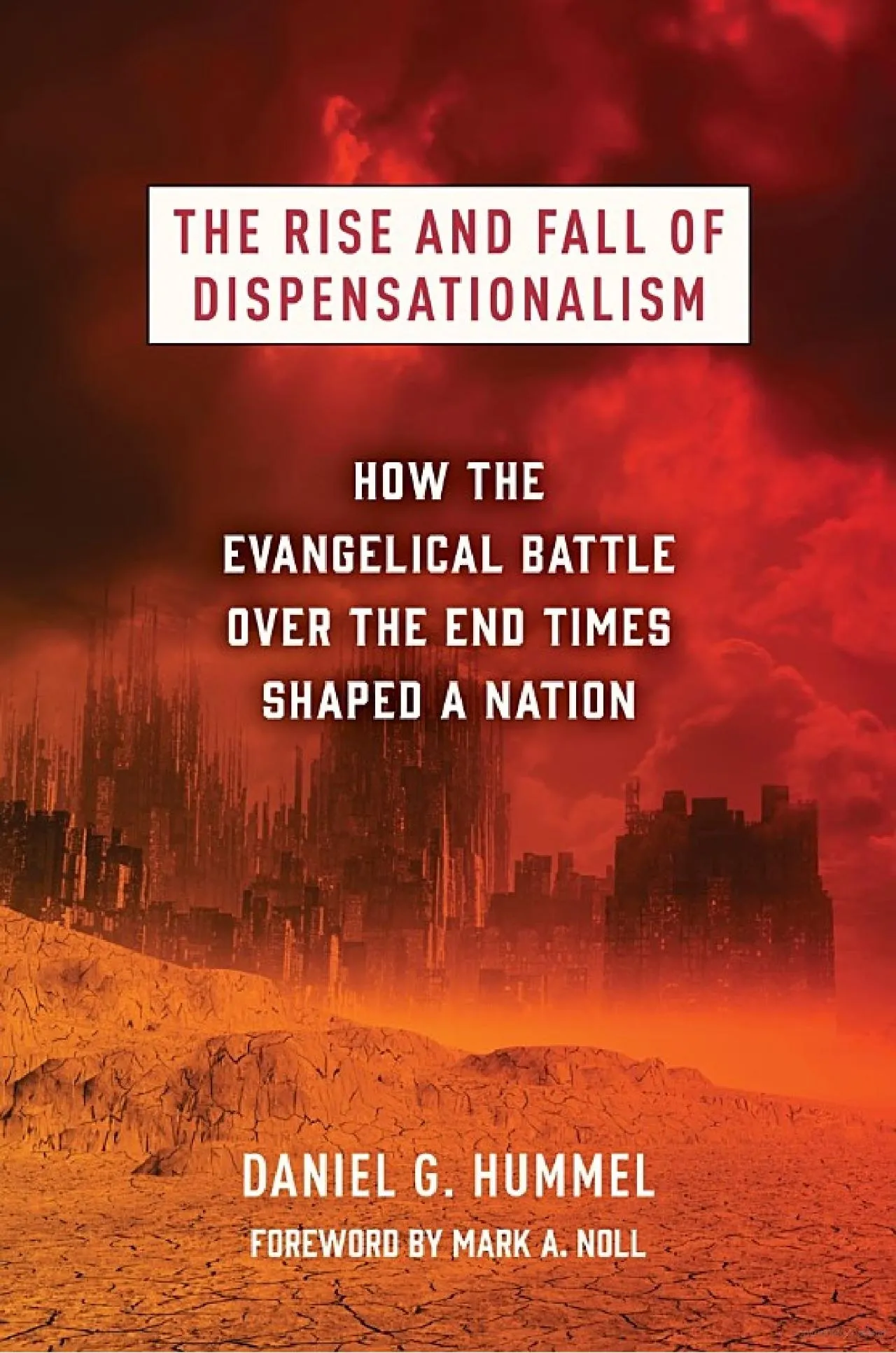
This large volume book, The Rise and Fall of Dispensationalism: How the Evangelical Battle over the End Times Shaped a Nation by Daniel G. Hummel and Mark A. Noll, covers the history of dispensational teaching and shows that while most scholars have abandoned or largely transformed the core teachings of early dispensational theology, some teachings are ingrained in popular American religious thought.
For instance, no theologians throughout church history taught a “rapture of the church” until the 1800s. Yet, this rapture teaching of dispensationalism is popular even outside Christian cultures because of the many popular books that forego scholarly research.
Here are some of my highlights from the book.
- Dispensationalism in this popular form has managed to permeate vast sections of American culture.
- If you’ve contemplated the “plain meaning” of the Bible as the most authoritative interpretation of Scripture, you’ve encountered debates deeply shaped by dispensationalism.
- If you’ve met Christians who express strong support for the State of Israel based on interpretations of biblical prophecy, you’ve stumbled upon one of the geopolitical issues shaped by dispensational theology.
- If you’ve watched speakers teaching that the earth is headed for annihilation, that churches are outposts in a world careening toward decline, or that a conspiracy of satanic power is bringing about a one-world government—then you’ve seen patterns of thinking that have been deeply shaped by dispensationalism.
- Dispensationalism was “a humanly contrived system that has been imposed upon the Bible, and not a scheme of doctrine derived from it.”
- The rise and fall of dispensationalism over the past two hundred years is a window into a fascinating tapestry of religion, theology, culture, politics, and social change in America. The story is expansive in scope as well as time, stretching from nineteenth-century dissenters in the Church of Ireland to the twenty-first-century New York Times Best Seller list. Mauro’s creation of the term sits conveniently near the midpoint of this story. The twists and turns of the tradition, and the ebbs and flows of its relationships to competitors and American culture, are what propel dispensationalism, in this story, on its rise and fall trajectory.
- First, dispensationalism brings to the fore the interdependent relationship between theology and culture that has shaped American evangelicalism.
- Second, a focus on dispensationalism illuminates contemporary trends toward polarization that have plagued evangelicalism in recent decades. These trends, I contend, are deeply intertwined with the “rise and fall” narrative of dispensationalism. While it was never the only theological tradition among fundamentalists or evangelicals, dispensationalism supplied at least four generations of white conservative Protestants, stretching from the late nineteenth century to the late twentieth century, with a theological framework to read the Bible and understand the world.
- The original dissenters were unique for teaching that all of history was divided into a series of dispensations that inevitably ended with the failure of humans to fulfill their obligations to God. They taught that the current dispensation was nearly complete, revealing the failure of organized Christianity, and that soon the state churches and the societies they enabled in Europe and North America, which they called Christendom, would be destroyed.
- Dispensationalists have straddled popular and scholastic cultures—sometimes in cooperation, often in rivalry. The instability of dispensationalism is not unique nor is it an indicator of reception—mass culture has shaped all of American religion—but rarely have the swings been so dramatic, and so dramatically significant to the fate of a theological tradition.
- Finally, dispensationalism has always been a dissenter movement, and one with a populist bent.
- The movement carved out a space that took ideas seriously but did not directly engage with contemporary thought, displaying an anti-intellectual intellectualism that is a common feature of populist movements.
Leave a Reply