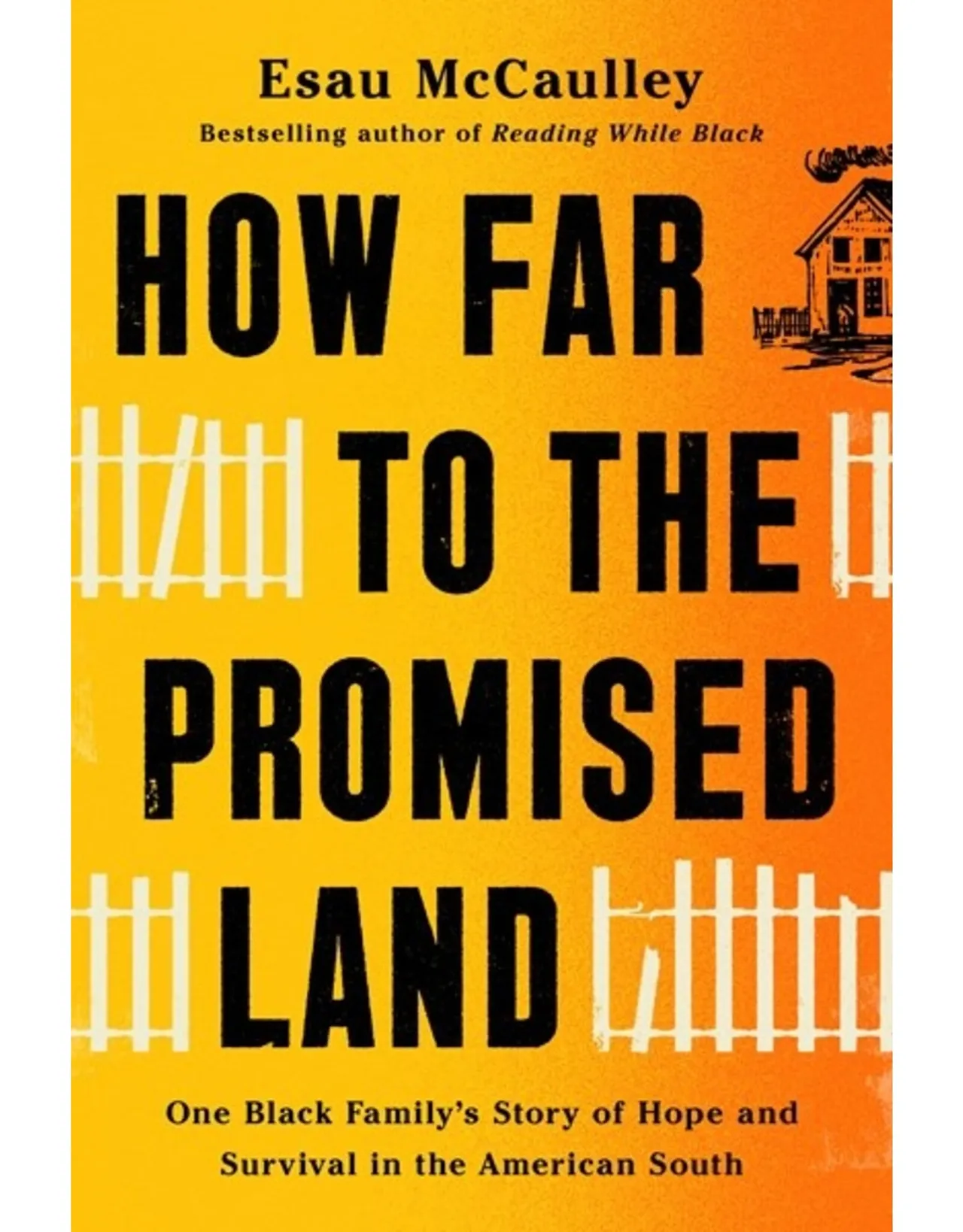
I was first introduced to Dr. Esau McCaulley in 2020 as I listened to a new podcast called the The Disrupters: Faith Changing Culture produced by Intervarsity Press. Esau McCaulley was the host of this podcast. My initial responses to Esau were not positive. I argued with him in my thoughts. At first, I was offended by what he said. Gradually, I was challenged by what he said. Eventually, I was changed by what he said.
My prejudices run deep. God has used Esau in my life to expose and change those prejudices. I am grateful to Esau as I grow in grace and seek justice and mercy for those who are not as privileged.
This book is a memoir. Memoirs are not my favorite literary genre and so I was hesitant about this book. Esau grew up in Huntsville, Alabama, graduated from Sewanee: The University Of The South, studied under N. T. Wright, and was an Anglican priest. All of this gave me some familiar context for his life story.
Here are some parts that I highlighted from this book.
- Nobody escapes poverty; we are marked by it. The friends, relationships, and traumas we experienced linger. We carry them wherever we go.
- There is no Black faith that doesn’t wrestle with the problem of evil.
- In those prayers, God came to me not with logical explanations of the problem of evil but with his presence. When I prayed, a sensation of warmth that began in my chest moved throughout my body. The room seemed less empty. The lack of a speedy deliverance frustrated and perplexed me, but I never doubted my experiences of God. It was how I survived. God and I have been through hard times together; we have a relationship born of that intimacy.
- Racism is not like puberty. You do not grow into it bit by bit, the way your body makes its way from the children’s clothing section to the adults’. Anti-Blackness is more like the Big Bang, an explosion in which newly formed planets radiate out at light speed. Black children grow up fast because our flesh stirs up complex emotions in those much older than us. During the same years when we’re memorizing vocabulary words and multiplication tables, we are also readying ourselves to read and respond to grown-up feelings.
- The rest of my life would be spent trying to be Black as I experienced Blackness, and not Black as white people—whatever their political persuasion—imagined Blackness to be.
- In Huntsville, Blackness had been so normal that I didn’t realize the full impact of living in a Black world until I arrived at Sewanee. I had spent time in the white part of Huntsville, but only as a visitor; it had never been home. There was no “white part” of Sewanee. It encompassed the whole of the campus and the surrounding community.
- Balancing a box in my arms, I glanced into a couple of rooms as I passed, then stopped transfixed at a room where a Confederate flag hung from a large section of blank wall. Few images are lodged as deeply in the Black imagination as that blue-and-white X with thirteen stars inside it. Seeing that flag in a place I viewed as an entryway to the land of opportunity caused my body to go stiff and my heart to race. Up to that point, the only Confederate flags I’d seen had been the ones waving from the backs of pickup trucks on Alabama roadways, indicating that I’d taken a wrong turn. This one seemed to suggest the same thing here.
- But evil cannot be wholly explained by the brokenness of the world. Sometimes we participate in the breaking.
- People are always more than the bad decisions they make. As long as we draw breath, there is always a chance to start anew. That is the central teaching of Christianity.
Leave a Reply