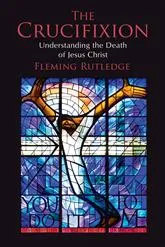
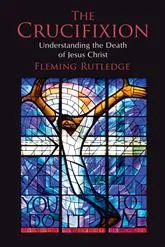
The second book that I read for Lent was The Crucifixion: Understanding the Death of Jesus Christ by Fleming Rutledge. Unlike the other book that was just over 100 pages, this book is almost 700 pages.
What did happen on the cross?
Most preachers do not really understand and give some vague understanding. Some preachers propose one perspective and demonize anyone who holds another perspective. In recent years, several scholars have interacted with the differing perspectives. Fleming Rutledge, a scholar and pastor, jumps in deeply into the conversation. This book was developed over 20 years.
Fleming Rutledge explores the various motifs proposed over thousands of years to describe what happened on the cross.
- Passover and exodus
- Blood sacrifice
- Ransom and redemption
- The Great Assize
- Christus Victor
- Descent into hell
- Substitution
- Recapitulation
This book is a deep dive into the topic of what happened on the cross.
I did not thoroughly understood everything in this book. That is probably my main negative on the book. Sometimes when I am confused by books, the summaries at the end of the chapters make the subject clear. Some of Fleming Rutledge’s summaries still seemed to be at a level that left things unclear to me.
Overall, I highly recommend this book for the following reasons.
- This is the primary scholarly work on the subject with which other scholars must interact.
- The Descent into hell section is one of the greatest presentations of understanding the ancient creedal belief of the “harrowing of hell.” If you can’t work through 600 pages, I would highly recommend this section by itself. I heard the author say on a podcast that she thought this was her most significant contribution in the book.
- The distinction she makes between popular, new motifs and their close orthodox motifs.
This is the second book by Fleming Rutledge that I have read. There are some authors with which I would just love to have a couple hours of conversation. Fleming Rutledge is one of those authors.
Leave a Reply