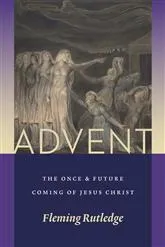
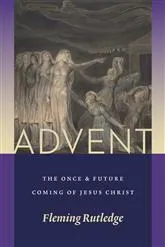
During this Advent season, I read Fleming Rutledge’s, Advent The Once and Future Coming of Jesus Christ. The book is a collection of “Advent” homilies given by The Rev. Fleming Rutledge over a period from the 1980s to 2018. The publisher describes the book as follows.
“Advent, says Fleming Rutledge, is not for the faint of heart. As the midnight of the Christian year, the season of Advent is rife with dark, gritty realities. In this book, with her trademark wit and wisdom, Rutledge explores Advent as a time of rich paradoxes, a season celebrating at once Christ’s incarnation and his second coming, and she masterfully unfolds the ethical and future-oriented significance of Advent for the church.”
Three major impressions that I received from this book were:
- The Avent season is not really about Christmas. It is a season of waiting and hoping for the mercy and justice of the coming of Jesus in the midst of turmoil, devastation, suffering and pain.
- The Advent season has a rich tradition from the early church.
- The things that seem so consequential when they are happening are less so as remembered. Some of the significant historical events Fleming Rutledge refers to in her homilies are not as significant today as we thought they were or would be.
The following are some of the sayings that I highlighted in the book.
“Many of us in the American church are addicted to preaching that makes us, the hearers, into the heroes. We listen to sermons to receive advice—about how we can do better or we can try harder or we can be stronger in this or that aspect of Christian life. For all of us suffering this theological addiction, Rutledge’s Advent: The Once and Future Coming of Jesus Christ is the rehab program we need. God is the saving agent here, and God’s coming in Jesus Christ to dismiss our efforts at self-justification is the recurring theme. Reading this book liberates us to enjoy a new theological sobriety.” —Wesley Hill Trinity School for Ministry, Ambridge, Pennsylvania on accommodation page.
“Advent, however, differs from the other seasons in that it looks beyond history altogether and awaits Jesus Christ’s coming again “in glory to judge the living and the dead.” In the cycle of seasons and festival days that takes the church through the life of Christ, it is Advent that gives us the final consummation; it is the season of the last things.” page 6
“In a very real sense, the Christian community lives in Advent all the time. It can well be called the Time Between, because the people of God live in the time between the first coming of Christ, incognito in the stable in Bethlehem, and his second coming, in glory, to judge the living and the dead.” page 7
“The disappointment, brokenness, suffering, and pain that characterize life in this present world is held in dynamic tension with the promise of future glory that is yet to come. In that Advent tension, the church lives its life.” page 7
“The calling of the church is to place itself where God is already at work. The church lives, therefore, without fear, in faith that the cosmic change of regime has already been accomplished.” page 13
“Advent faces into death and looks beyond it to the coming judgment of God upon all that deceives, twists, undermines, pollutes, contaminates, and kills his beloved creation. There can be no community of the resurrection without the conquest of death and the consummation of the kingdom of God. In those assurances lies the hope of the world.” page 22
“I have personally been present when new names for the candles of the four Sundays of Advent have been proposed along the lines of Peace, Joy, Love, and Hope. This presents quite a contrast with the medieval Advent themes of death, judgment, heaven, and hell—in that order! As we have seen, hope is a central key to the meaning of Advent, but hope is a very meager concept if it is not measured against the malevolence and godlessness of the forces that assail the creation and its creatures every day…” page 23 (bold mine)
I enjoyed reading these homilies during Advent. Some were similar to each other and so there were some repetitious themes.
Leave a Reply